Have you ever wondered what it would be like to be a bee?
On the first warm day of spring, a bumblebee queen crawls out of her winter burrow. The sun shines. A gentle breeze ruffles her hairs. Hungry after her long winter sleep, the first thing on the bumblebee's mind is food. She lifts off - buzzzzzzzzzz. She uses her five eyes to search for flowers. Three tiny eyes see only light and dark. Two larger eyes are made up of many small panes, or lenses. Each sees a tiny bit of the world, a single pixel. The bee's brain puts them together to make a fuzzy picture.
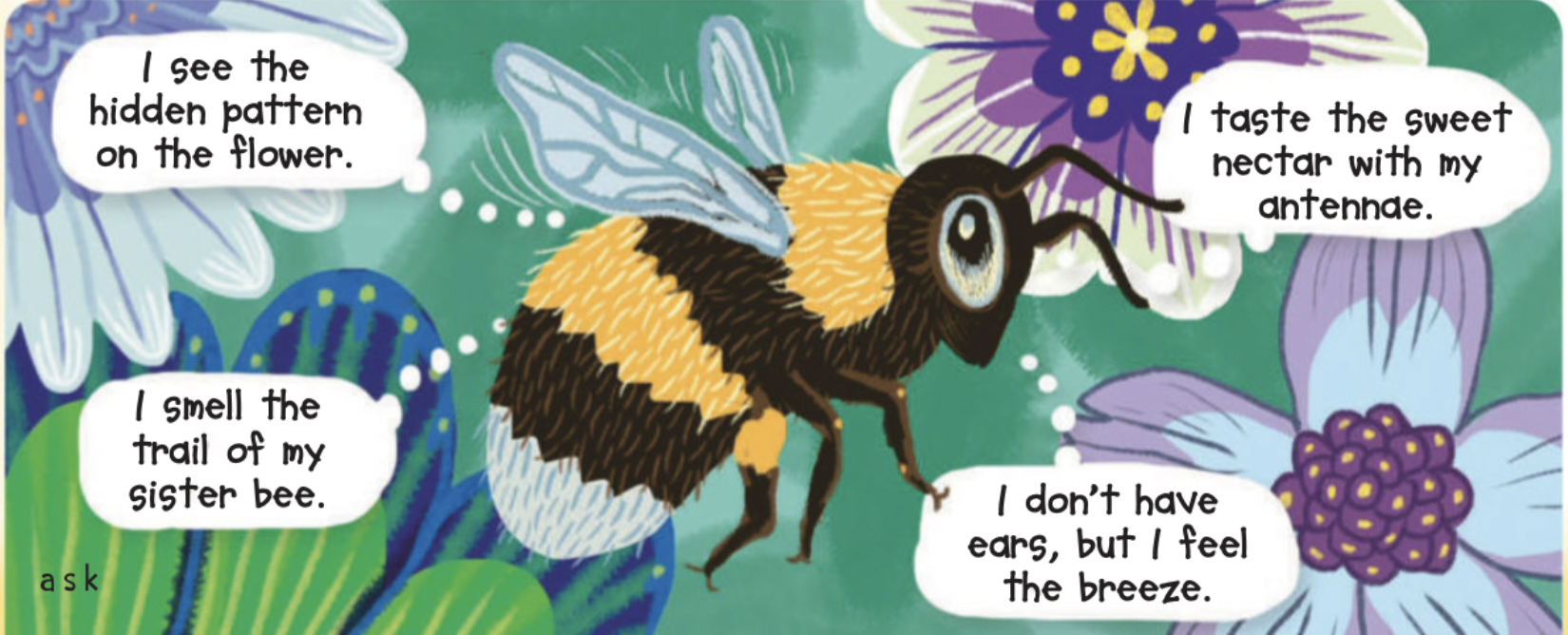
There are flowers ahead, but they don't look the same to the bumblebee as they do to people. Bees can see greens, blues, and yellows, but they don't see red. So a red flower would look very different to them. But bees can see an extra color that humans can't: ultraviolet, or UV. Many flowers have UV patterns that look like "landing pads" to bees, but are invisible to humans.
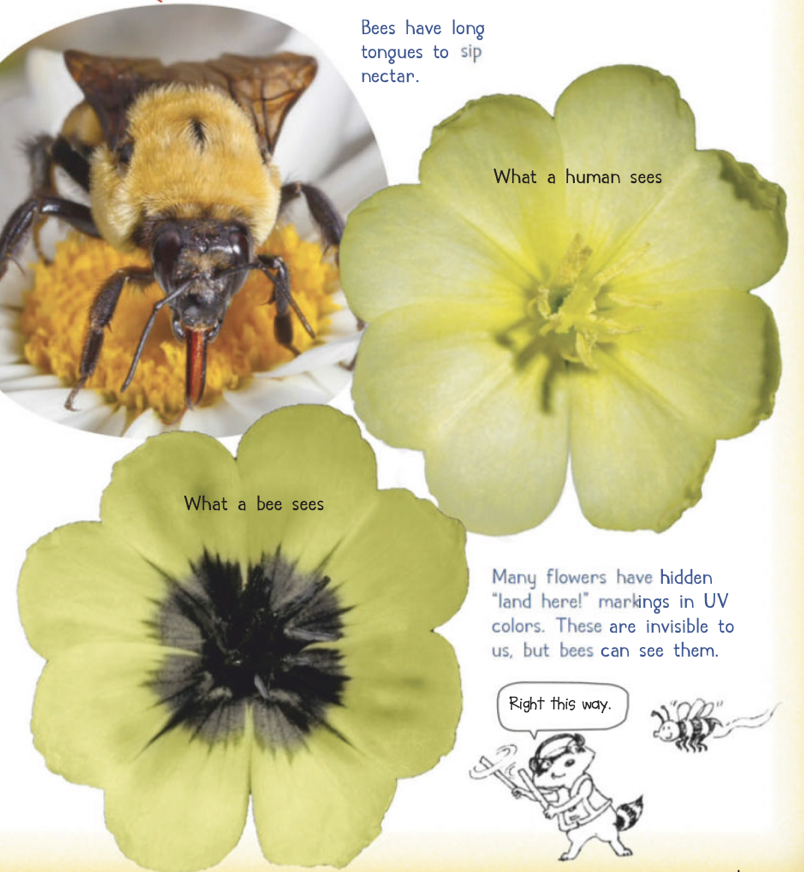
Many flowers have hidden "land here!" markings in UV colors. These are invisible to us, but bees can see them.
The bumblebee queen lands on a flower. She smells nectar - but not with her nose. She tastes it with hairs on her tongue and antennae.
The bumblebee slurps the nectar with her long tongue and collects pollen in hairy "baskets" on her legs. Then she looks for a place to build her nest. She chooses a cozy hole that once belonged to a mouse. She lays eggs in little wax pots that she has filled with nectar and pollen.
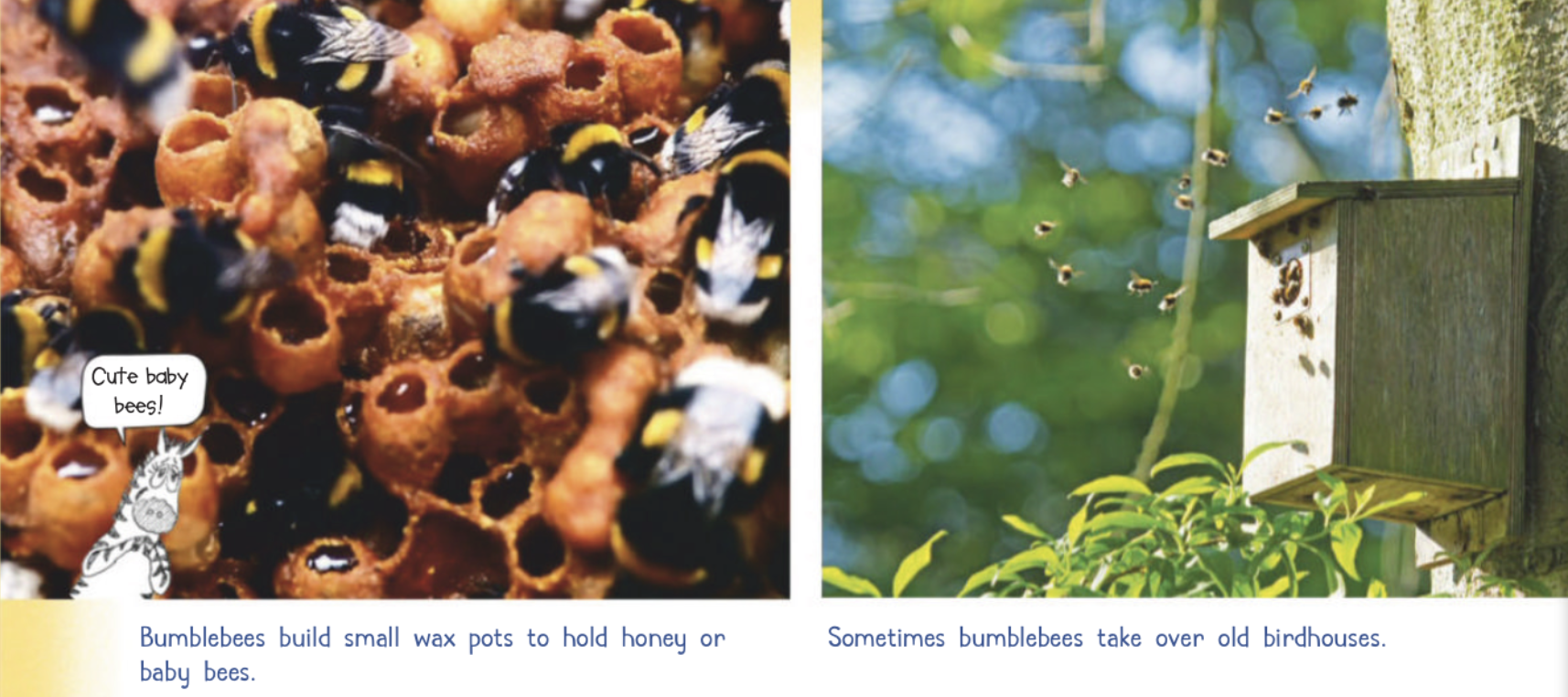
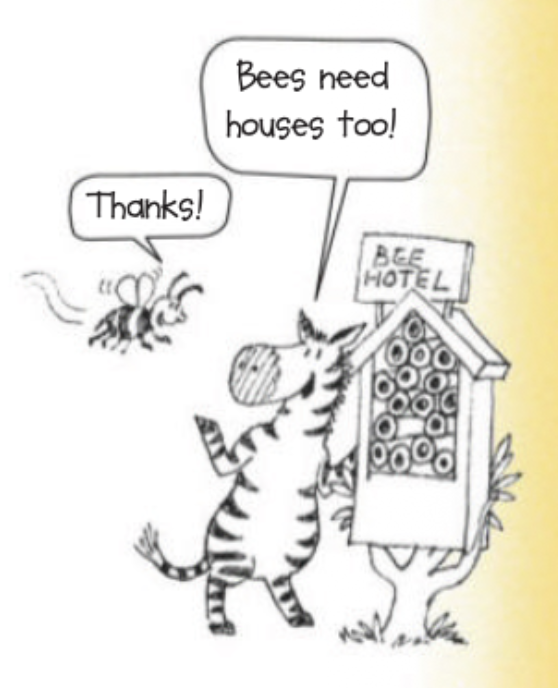
Bumblebees build small wax pots to hold honey or baby bees. Sometimes bumblebees take over old birdhouses.
Soon the eggs hatch and grow into new workers. They begin to collect nectar and pollen to feed more baby bees. They need to find the most nutritious food to feed the young back at home. How can they do this? They give it a taste test!
Scientists need to do more tests to be sure, but they think that bees can tell from a tiny taste which flowers are the most nutritious. A bumblebee might taste different nectars and choose the best to bring back to the nest. They may also remember the patterns of the tastiest flowers.
Meanwhile, there are other bees buzzing about as well. They are all after the same nectar. It would be handy if the bees could tell if another insect had already landed on a flower and taken all the nectar. And for that, bees use another special sense - electroreception.
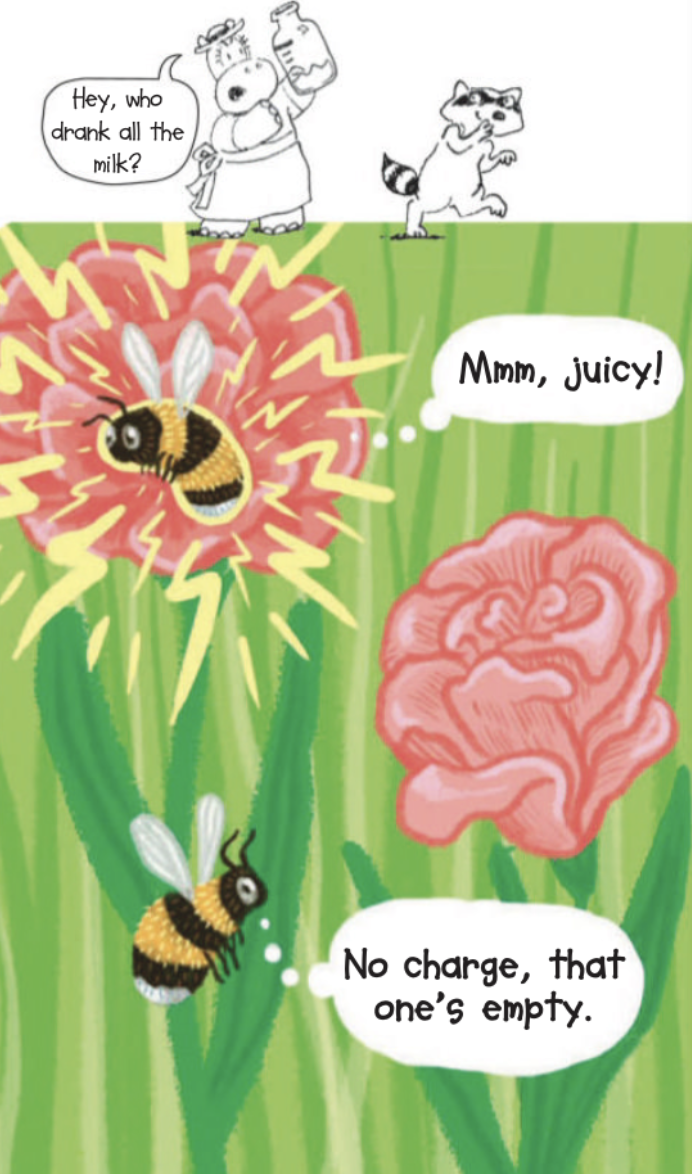
Bees can use hairs on their bodies to detect electricity, a bit like feeling static in laundry. When a bee lands on a flower, the electricity around the flower changes. The next bee that lands can sense this electrical change. Scientists think bumblebees might be using this electric sense to skip flowers that another bee has already visited.
As she flies home with her nectar, a bumblebee needs to avoid becoming a bird's lunch. She's helped by super-speedy vision.
Like humans, bees see motion by comparing pictures sent by the eyes many times each second. If the position of an object changes, it means it's moving. It takes about a tenth of a second for a human brain to spot motion. But bumblebee eyes send many more pictures to the brain each second. This means they notice a bird swooping in much faster than we would. This helps them avoid hungry beaks.
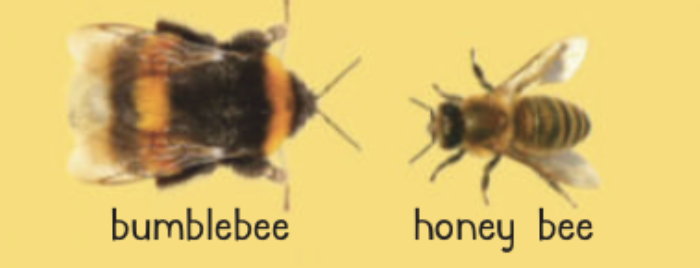
There are hundreds of different kinds of bees in the world. Bumblebees are larger and fuzzier than honeybees. Bumblebees live in holes in the ground, not in big hives.
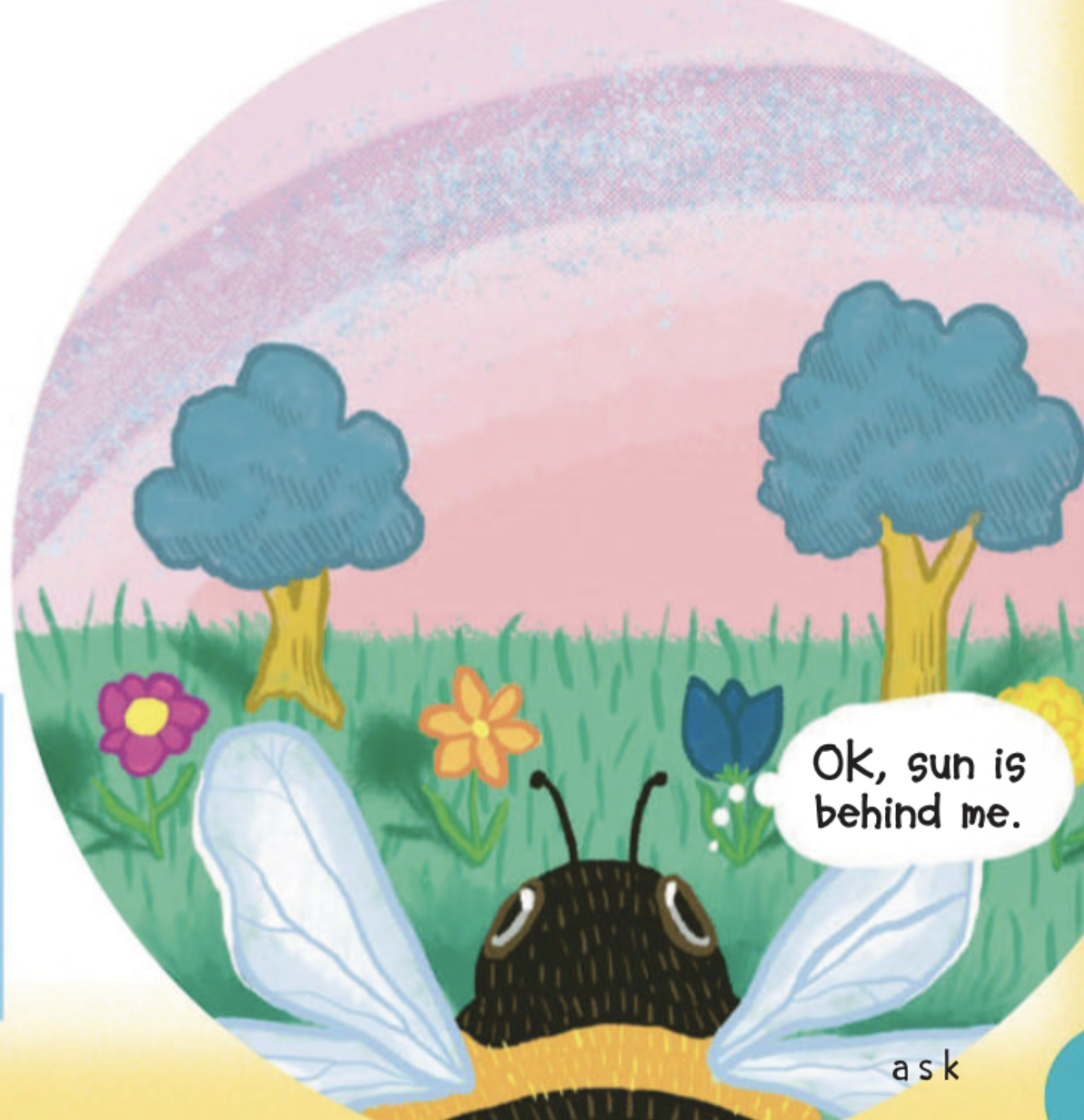
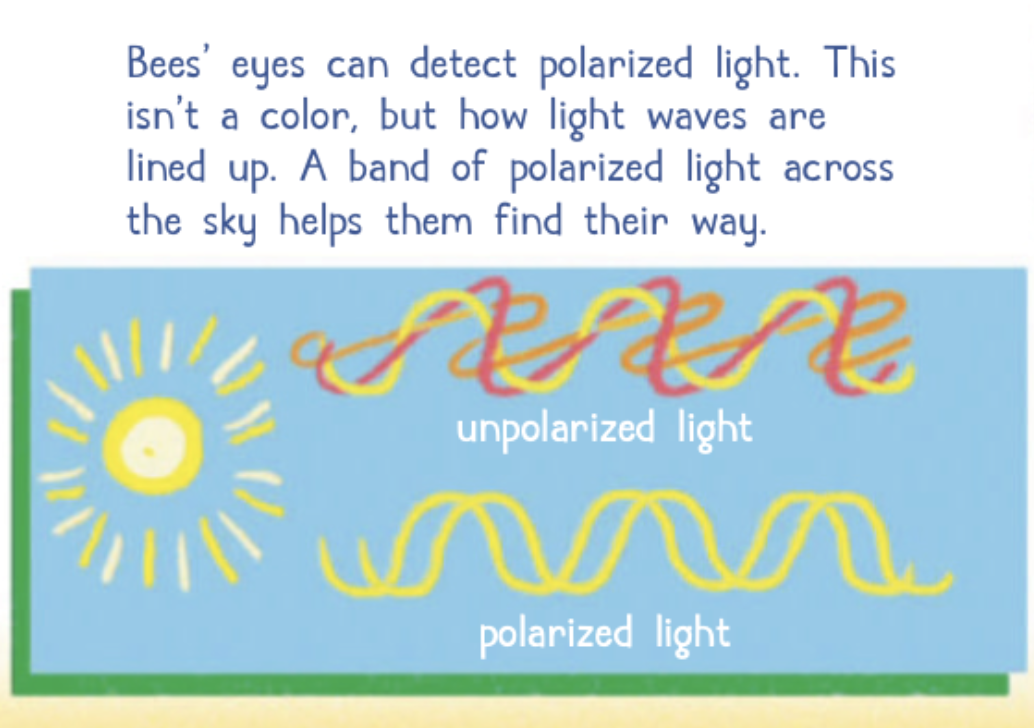
Bumblebee eyes have one more super power. Like many insects and birds, bumblebees can see polarized light. That's not a color, but light waves vibrating in the same direction. A ring of polarized light surrounds the sun like a hula hoop. It moves across the sky through the day. Bees can use it to find their way home even when it's cloudy.
As winter winds begin to blow, changes come to the colony. The old queen, the workers, and the males will not survive the season. But new young queens, their bellies fat with nectar, are looking for safe places for a long winter nap.
They look for holes in the ground or deep cracks in brush piles and walls. In spring, they will crawl up from their burrows. They will use their senses to form new colonies and begin the cycle all over again.