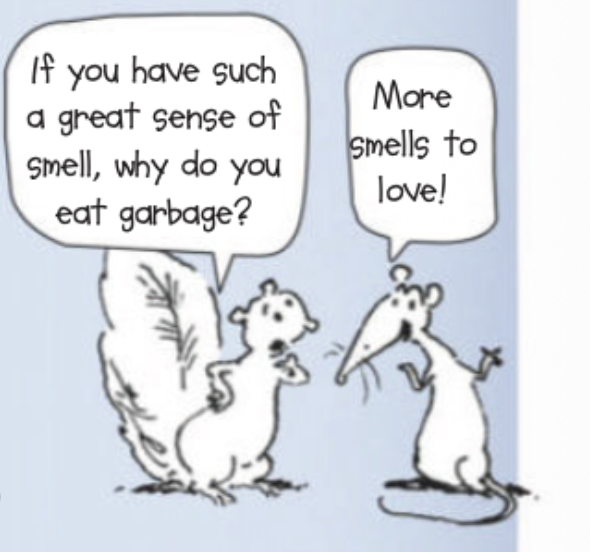
Humans, sadly, have a pretty poor sense of smell. In fact, most animals have much sharper noses than we do. So humans often train animals to do sniffing jobs. Trained dogs and rats can smell out everything from explosives to sickness. Pigs are also talented sniffers. They are used to hunt for truffles, a yummy mushroom that grows underground.
But putting animals on smell duty has some problems. Animals are expensive to train. They get tired and bored. They need human handlers. Could we make an electronic nose that could do the job?
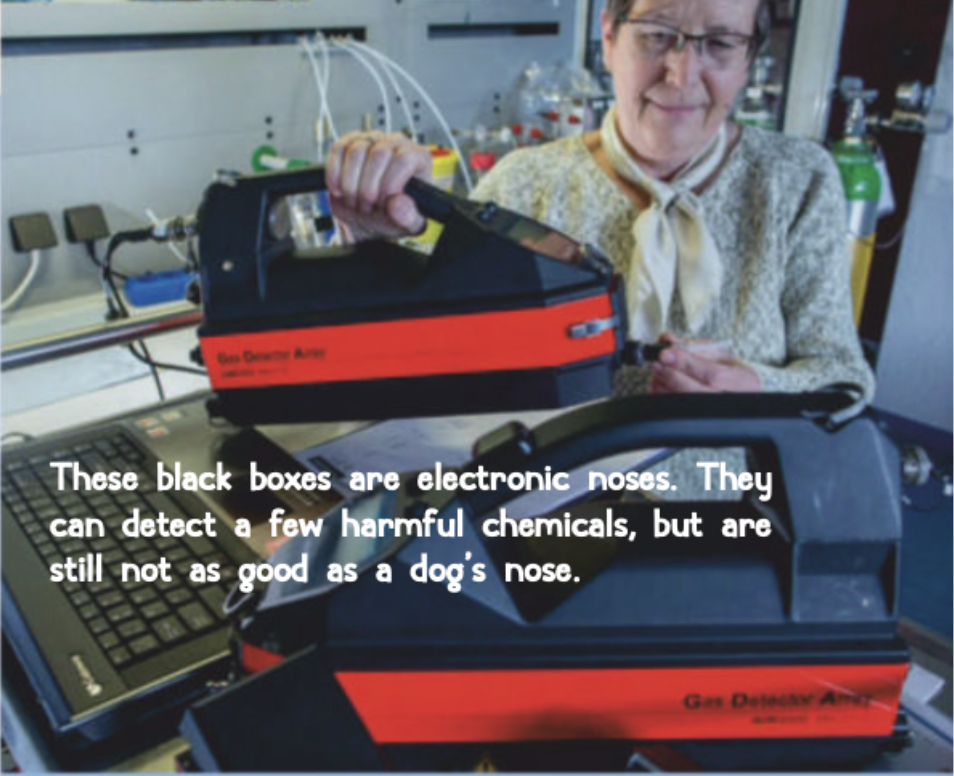
Many researchers are working on it. They make sensors out of materials that change when they meet dangerous chemicals. This triggers a signal on a screen or sounds an alarm.
One lab at the Georgia Institute of Technology is making detectors that sniff the air in little bursts, just like a dog or rat. It turns out that sniffing is the best way to get a good sample of what's in the air.
So far, animal noses are still much better at catching faint smells. But someday, the robots may have all the truffles.
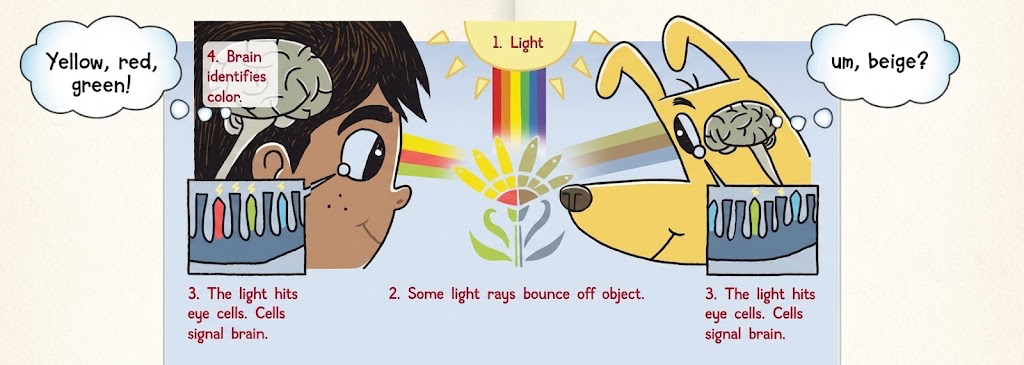
As he steps out of the trees, Zachary's pupils get smaller to adjust to the bright sunlight. Dogs, cats, and humans all see by catching light with special cells at the back of the eye. Rod cells see light, dark, and movement. Cone cells sense color.
Humans have three kinds of color-sensing cone cells. Dogs and cats have only two. To Zachary, the park is a blaze of color. Mutt sees a more muted scene. Dogs see blues and yellows, but the green grass and the red berries probably look like shades of green.
To Kit, the world might look like a black-and-white picture with a few weak colors. But cats' eyes respond strongly to motion. Not distracted by colors, Kit quickly spots anything that moves. That's helpful if you have to catch your dinner.
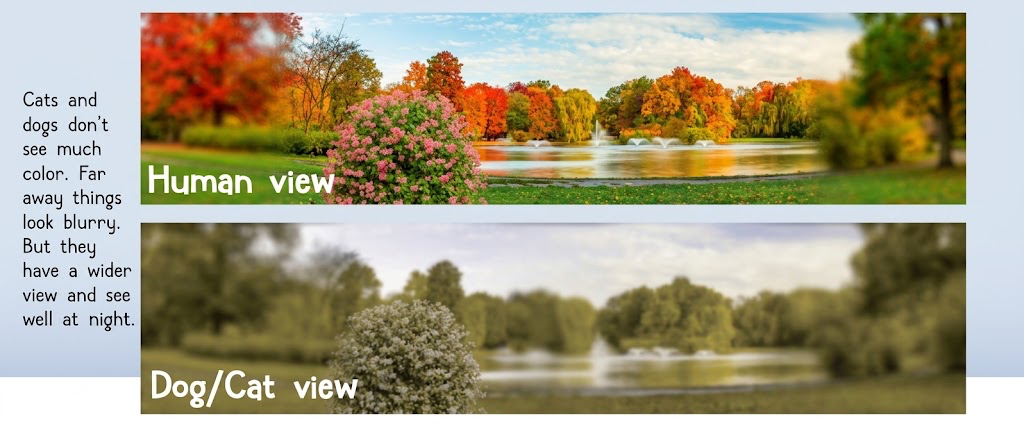
Cats and dogs don't see much color. Far away things look blurry. But they have a wider view and see well at night.
Dogs and cats also have the advantage at night. Both can see in the dark much better than humans. Their pupils can stretch extra wide to let in more light. They have more rod cells, to catch every bit of light. They also have a shiny layer at the back of their eyes, called the tapetum.
The tapetum works like a mirror to bounce light to the light-detecting cells. Sometimes at night, cats' and dogs' eyes seem to glow when they catch the light. That glow comes from light bouncing off the tapetum.
You can't ask a dog if he can hear a whistle, and you won't get a cat to read an eye chart. So how do we know how they sense the world?
The first clues come from observing how animals act. If your dog whimpers at thunder, you can be pretty sure she hears it.
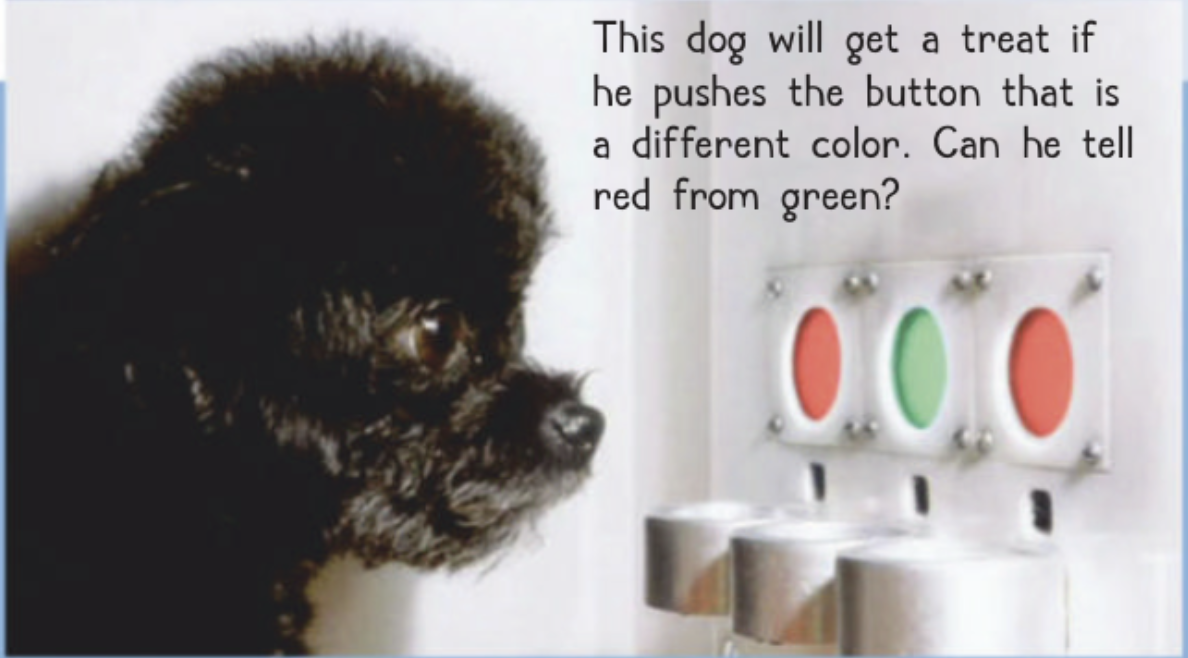
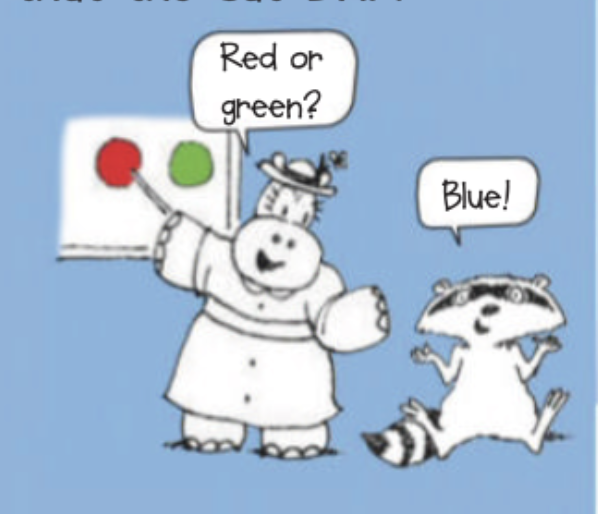
Researchers also give animals tests. They might train some dogs to expect a treat if they push the button that's a different color. Can the dogs pick a green button next to two red ones? If not, they may not be able to tell red from green.
Scientists also study animals' bodies. They can count the odor sensors in a dog's nose. And the more sensors, the better it can smell.
Finally, researchers can study an animal's DNA. DNA contains instructions for how to build body parts. Researchers have found that the cat DNA is missing the bit that makes sweet-sensing taste buds in other animals. So cats don't care about candy.

Finally, it's time for lunch. Zachary's mouth is already watering for his turkey sandwiches and cookies. Zachary keeps a tight hold on his sandwich, because Mutt tends to gulp anything he can get his snout into.
Dogs' tongues are covered in taste buds, just like ours. They, too, can taste sweet, salty, bitter, and sour. But taste buds are only helpful if food stays in the mouth long enough to be tasted. Many dogs gulp their food as if they were trying to win an eating contest. Fortunately, dogs have extra strong stomach acid to kill any bacteria they might swallow.
Kit is a much pickier eater. Cats don't have many taste buds, and they can't taste sweet at all. So Kit isn't interested in Zachary's cookies. Kit is looking for plain meat.
Zachary gives Mutt a bite of his sandwich and flicks Kit a bit of turkey. Then he settles back to enjoy lunch. With 10,000 taste buds that can detect a wide variety of flavors, this is one time when Zachary's senses really take the cake.